
Why Students Need Soft Skills Training
Blog authored by Anushikha Dwivedi, Founder of Skillvriksha
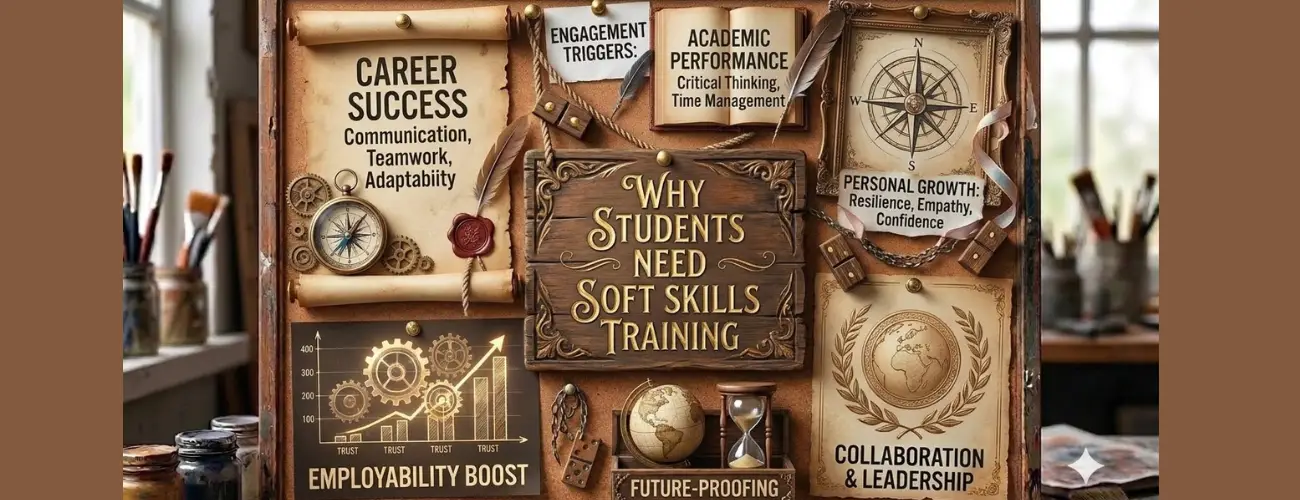
Academic knowledge can help students qualify for opportunities, but soft skills for students help them succeed in interviews, internships, college projects, and future careers
Skills such as communication, teamwork, problem-solving, adaptability, and confidence are increasingly important. Through soft skills training online and regular practice, students can strengthen essential abilities, including communication skills for students, before entering the workplace
Students spend years developing academic knowledge.
They study subjects, prepare for examinations, complete assignments, and work hard to achieve good grades.
But when they enter the professional world, they quickly discover something important.
Academic knowledge alone is not enough.
Employers also expect young professionals to communicate confidently, collaborate with teams, solve problems, manage time, adapt to change, and behave professionally.
These abilities are commonly known as soft skills.
Developing them while still studying can give students a significant advantage when they begin applying for internships and jobs.
What Are Soft Skills for Students?
Soft skills for students are personal and interpersonal abilities that influence how effectively students communicate, collaborate, solve problems, and manage different situations.
Unlike technical skills, soft skills are useful across almost every profession.
Important soft skills include:
Communication
Teamwork
Problem-solving
Time management
Adaptability
Leadership
Critical thinking
Emotional intelligence
Professional etiquette
Confidence
A student may have excellent technical knowledge, but without these abilities, communicating that knowledge effectively can become difficult.
Why Are Soft Skills Important for Students?
Education prepares students with knowledge.
Soft skills prepare them to apply that knowledge effectively.
Students regularly need soft skills while:
Participating in classroom discussions.
Delivering presentations.
Working on group projects.
Attending interviews.
Completing internships.
Networking with professionals.
Managing deadlines.
Developing soft skills for students early also makes the transition from education to employment much smoother.
Communication Skills for Students Build Confidence
Communication is one of the most important abilities a student can develop.
Strong communication skills for students help them express ideas clearly, listen carefully, participate confidently, and interact effectively with others.
Communication includes much more than speaking.
Students need to develop:
Verbal communication.
Written communication.
Active listening.
Presentation skills.
Body language.
These abilities become especially important during interviews and the first few years of employment.
Real-Life Example - Two Students at a Job Interview
Imagine two engineering students applying for the same graduate position.
Both have similar academic scores and technical knowledge.
During the interview, the first candidate provides very short answers, struggles to explain projects, and avoids eye contact.
The second candidate clearly explains the same technical concepts, provides examples from college projects, listens carefully to questions, and communicates confidently.
Even with similar academic qualifications, the second candidate may create a stronger impression.
The difference is not technical knowledge.
It is communication.
This is why developing communication skills for students before placement season can be extremely valuable.
Soft Skills Improve Teamwork
Modern workplaces depend heavily on collaboration.
Employees frequently work with colleagues from different departments, locations, backgrounds, and areas of expertise.
Students experience similar situations during group assignments and college projects.
Effective teamwork requires students to:
Listen to different opinions.
Share responsibilities.
Resolve disagreements.
Meet commitments.
Support team members.
Communicate progress.
Learning these behaviours during college helps students prepare for professional environments.
Problem-Solving Prepares Students for Real-World Challenges
Academic questions often have clearly defined answers.
Workplace problems may not.
Employees are regularly expected to understand unfamiliar situations, analyze information, consider alternatives, and recommend solutions.
Students can strengthen problem-solving skills by:
Participating in case studies.
Solving practical problems.
Working on projects.
Joining competitions.
Asking questions.
Evaluating multiple solutions.
Problem-solving is one of the most valuable soft skills for students because it encourages independent thinking.
Why Soft Skills Training Online Can Help
Not every student has access to professional development programs through their school or college.
This is where soft skills training online can provide additional learning opportunities.
Structured programs can help students practice:
Public speaking.
Professional communication.
Interview skills.
Leadership.
Time management.
Teamwork.
Presentation skills.
The flexibility of soft skills training online also allows students to learn alongside their academic schedules.
However, simply watching lessons is not enough.
Soft skills improve through practice.
Students should apply what they learn through presentations, conversations, projects, interviews, and other real situations.
Real-Life Example - A Student Who Feared Presentations
A management student had strong academic performance but avoided classroom presentations because of nervousness.
The student decided to improve gradually.
The approach included:
Completing soft skills training online focused on communication.
Practicing presentations at home.
Recording short speeches and reviewing them.
Volunteering for small speaking opportunities.
Asking classmates for feedback.
Over several months, the student’s confidence improved.
By placement season, presenting ideas in front of interview panels felt far more comfortable.
Confidence was not developed overnight.
It came through repeated practice.
Time Management Is an Essential Student Skill
Students frequently balance classes, assignments, examinations, projects, internships, and personal responsibilities.
Without good time management, even talented students can become overwhelmed.
Useful habits include:
Planning the week in advance.
Prioritizing important assignments.
Breaking large tasks into smaller steps.
Avoiding unnecessary procrastination.
Setting realistic deadlines.
These habits are valuable during education and become even more important in professional life.