
Written vs Verbal Communication: Why Both Matter in Your Career
Blog authored by Anushikha Dwivedi, Founder of Skillvriksha
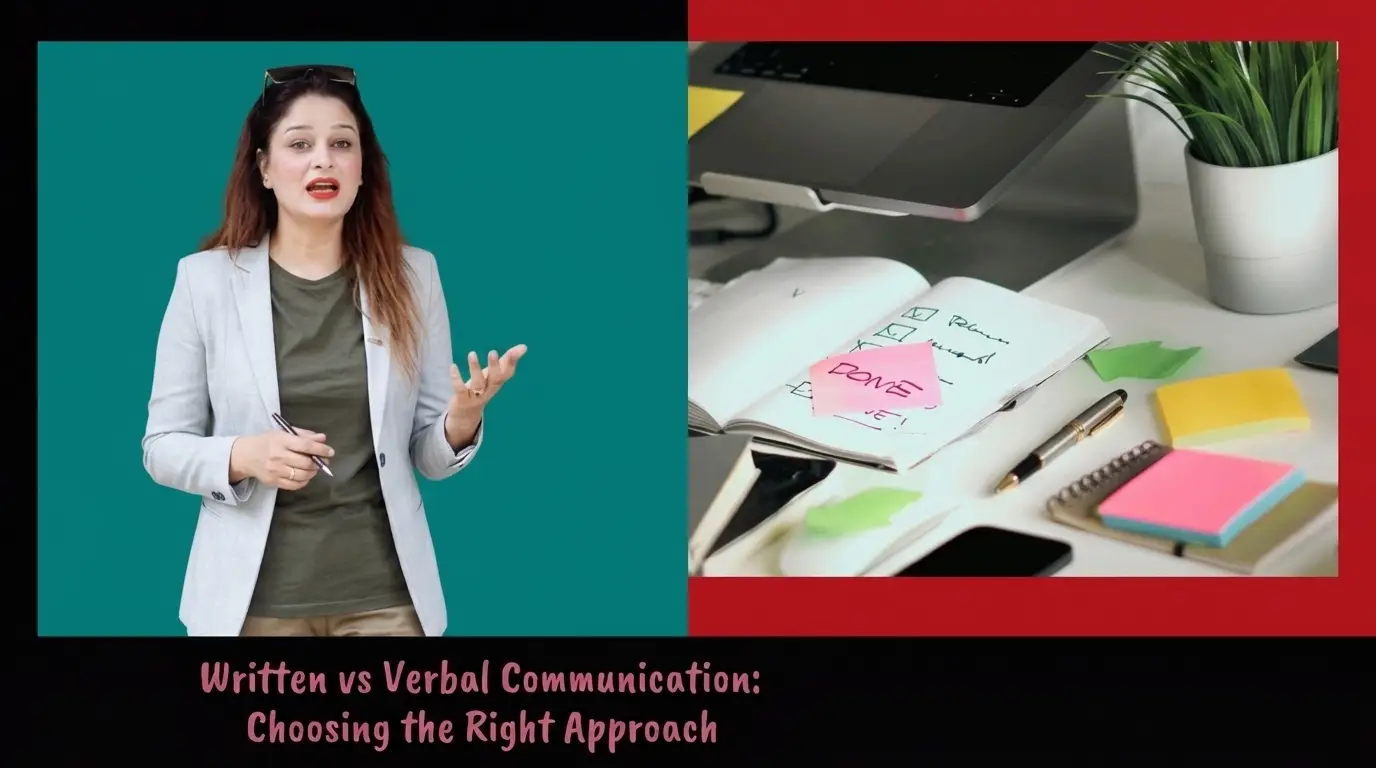
Strong verbal communication skills and effective written communication are essential for career success. Whether you’re presenting ideas in meetings, writing professional emails, or collaborating with colleagues, developing professional communication skills helps improve workplace relationships, build credibility, and create new career opportunities. Many professionals also seek guidance from a communication skills coach to strengthen their confidence and communication effectiveness.
No matter what industry you work in, communication is one of the most valuable skills you can develop.
Every day, professionals communicate through emails, presentations, meetings, reports, phone calls, video conferences, and informal conversations.
Yet many people underestimate how much communication influences their career growth.
Two employees may have the same technical expertise, but the one who communicates ideas more clearly often earns greater trust, stronger relationships, and better career opportunities.
Success in today’s workplace depends not only on what you know but also on how effectively you communicate it.
What Is the Difference Between Written and Verbal Communication?
Written communication involves sharing information through text.
Examples include:
Emails
Reports
Proposals
Business documents
Chat messages
Project updates
Verbal communication involves speaking directly with others.
Examples include:
Meetings
Presentations
Interviews
Phone calls
Client discussions
Team conversations
Both forms of communication are equally important because they serve different purposes in the workplace.
Strong professional communication skills require mastering both.
Why Written Communication Matters
Written communication creates a permanent record of information.
A well-written email or report demonstrates professionalism, attention to detail, and clarity.
Effective written communication helps professionals:
Share information accurately.
Reduce misunderstandings.
Document important decisions.
Maintain professionalism.
Improve collaboration.
Clear writing also saves time by reducing unnecessary follow-up conversations.
Real-Life Example: Project Coordinator
A project coordinator regularly shared weekly project updates.
Initially, updates contained incomplete information, leading to repeated clarification meetings.
After improving written communication, the coordinator began using clear subject lines, structured summaries, action items, and deadlines.
Within a few months:
Meetings became shorter.
Team members understood expectations more clearly.
Project delays reduced.
Stakeholder confidence improved.
Small improvements in written communication produced measurable business benefits.
Why Verbal Communication Skills Matter
While written communication provides clarity, verbal communication skills help professionals build relationships, influence decisions, and communicate confidently in real-time.
Strong verbal communication skills help professionals:
Present ideas confidently.
Participate effectively in meetings.
Handle difficult conversations.
Build trust with colleagues.
Improve leadership effectiveness.
Strengthen client relationships.
Professionals with strong verbal communication skills often become more influential within their organizations.
Communication Skills in the Workplace Build Strong Teams
Effective communication skills in the workplace improve collaboration between employees, departments, and leadership teams.
When communication is clear:
Projects move faster.
Conflicts reduce.
Decisions improve.
Teams collaborate more effectively.
Customer satisfaction increases.
Poor communication, on the other hand, often leads to confusion, missed deadlines, duplicated work, and unnecessary frustration.
Organizations value professionals who communicate clearly because they improve overall business performance.
Real-Life Example: Team Leader
A newly promoted team leader had excellent technical knowledge but struggled during meetings.
Instructions were often unclear, causing confusion among team members.
The leader focused on improving verbal communication skills by preparing meeting agendas, speaking more confidently, and encouraging team discussions.
Within a few months:
Team communication improved.
Employees asked fewer clarification questions.
Project execution became smoother.
Team engagement increased.
Better communication strengthened leadership effectiveness.
How a Communication Skills Coach Can Help
Many professionals understand the importance of communication but are unsure how to improve.
Working with a communication skills coach provides personalized guidance on:
Public speaking.
Presentation skills.
Active listening.
Business communication.
Executive presence.
Difficult conversations.
A communication skills coach helps professionals identify improvement areas and develop practical techniques that can be applied immediately in the workplace.
Written and Verbal Communication Must Work Together
Successful professionals know that written and verbal communication complement each other.
For example:
A project manager may present a new initiative during a meeting using strong verbal communication skills.
After the meeting, a clear written summary ensures everyone understands responsibilities, deadlines, and next steps.
Combining both communication styles reduces confusion and improves execution.
Case Study: How Better Communication Improved Project Delivery
A software implementation team regularly missed deadlines because project updates were inconsistent.
Meeting discussions often differed from written documentation.
The project manager introduced two changes:
Every meeting ended with a written summary.
Team members received communication training focused on professional communication skills.
After three months:
Project delays reduced significantly.
Team collaboration improved.
Client satisfaction increased.
Miscommunication became far less common.
The project’s success was driven not by technical improvements but by stronger communication.