
Human Skills That Matter Most in the AI Era
Blog authored by Anushikha Dwivedi, Founder of Skillvriksha
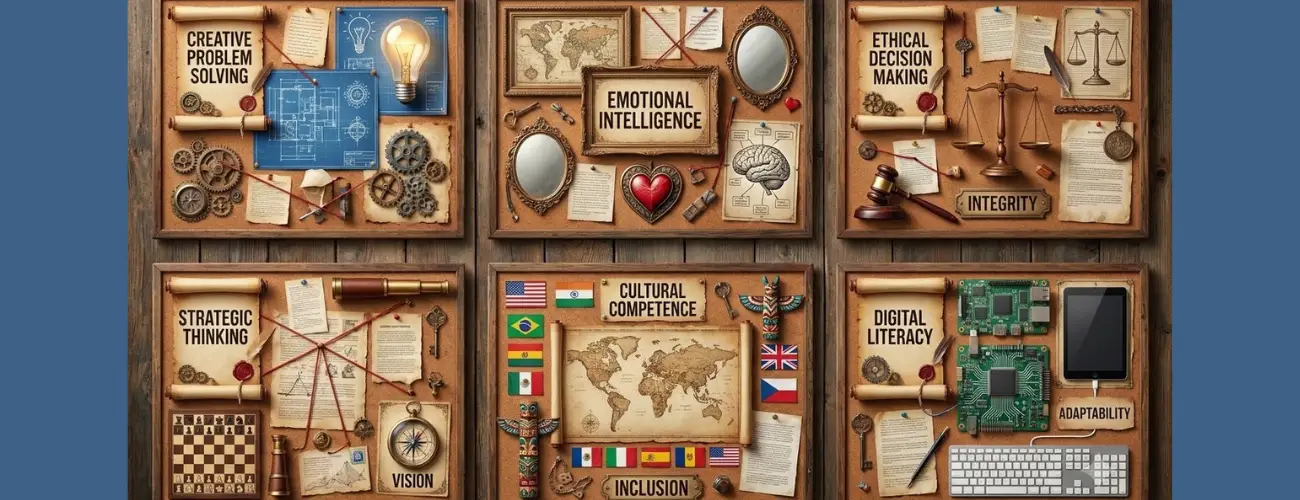
As Artificial Intelligence transforms the workplace, human abilities are becoming more important, not less. Critical thinking, communication, creativity, emotional intelligence, and adaptability skills are becoming essential future-ready skills.
Professionals who combine these abilities with technological knowledge and continuous learning through online skill development courses will be better prepared to succeed in an AI-driven workplace.
Artificial Intelligence is changing how we work.
Tasks that once required hours can now be completed in minutes. AI can analyze information, create reports, summarize documents, generate ideas, automate repetitive activities, and support complex decision-making.
Naturally, this creates an important question.
What skills will humans need when AI can perform more of our everyday work?
The answer is not simply learning more technology.
Technical knowledge will certainly remain important, but some of the biggest career advantages will come from skills that remain deeply human.
The professionals who succeed in the AI era will be those who know how to use technology while strengthening the human capabilities that technology cannot easily replace.
Why Human Skills Are Becoming More Important
Whenever technology changes the workplace, the nature of work changes with it.
AI can process enormous amounts of information quickly, but organizations still need people who can interpret information, understand context, communicate with others, make judgments, and take responsibility for decisions.
This makes human capabilities increasingly valuable.
Important future-ready skills include:
Critical thinking
Communication
Creativity
Emotional intelligence
Problem-solving
Collaboration
Leadership
Adaptability
The goal is not to compete with AI at tasks technology performs better.
The goal is to develop capabilities that complement it.
Critical Thinking Is a Future-Ready Skill
AI can generate answers extremely quickly.
But professionals still need to determine whether those answers make sense.
Critical thinking involves:
Questioning assumptions.
Evaluating information.
Identifying risks.
Comparing alternatives.
Making informed judgments.
For example, an AI system might analyze business data and recommend reducing costs in a particular department.
A business leader must still evaluate whether that recommendation could affect customers, employees, compliance, or long-term strategy.
Knowing how to ask the right questions may become just as valuable as knowing the answers.
Real-Life Example - The Financial Analyst
Consider a financial analyst who previously spent several hours collecting data and preparing monthly reports.
After AI-powered tools were introduced, much of the data collection and initial analysis became automated.
Instead of making the analyst unnecessary, the change created an opportunity.
The analyst could spend more time:
Interpreting financial trends.
Identifying business risks.
Explaining insights to leadership.
Evaluating different scenarios.
Recommending actions.
The role moved from preparing information toward understanding and applying it.
This is an example of how future-ready skills can become more valuable as technology handles repetitive activities.
Communication Becomes More Valuable in an AI-Driven Workplace
Technology can generate information.
Humans still need to communicate it effectively.
Professionals must explain complex ideas to colleagues, clients, managers, and customers who may have very different levels of technical understanding.
Strong communication involves:
Listening carefully.
Explaining ideas clearly.
Asking useful questions.
Presenting confidently.
Handling difficult conversations.
Adjusting communication for different audiences.
As AI increases the amount of information available, professionals who can turn that information into clear and meaningful communication will become increasingly valuable.
Why Adaptability Skills Matter More Than Ever
Perhaps one of the most important capabilities in the AI era is adaptability.
The tools professionals use today may look very different within a few years.
Job responsibilities will evolve.
New technologies will emerge.
Some activities will become automated, while entirely new responsibilities will appear.
Strong adaptability skills help professionals respond positively to these changes.
Adaptable professionals are willing to:
Learn new technologies.
Change established working methods.
Accept feedback.
Experiment with new approaches.
Develop new capabilities.
Take on unfamiliar responsibilities.
Instead of fearing every technological change, they learn how to use it effectively.
Real-Life Example - The Marketing Professional
A marketing professional had spent years manually researching customer trends and preparing campaign content.
AI tools suddenly made many of these activities much faster.
Initially, the professional worried that automation would reduce the value of the role.
Instead of resisting the technology, the marketer developed strong adaptability skills and learned how to use AI for research, brainstorming, and initial content development.
The time saved was invested in customer strategy, creative thinking, brand positioning, and campaign analysis.
The professional became more productive because AI became a tool rather than a competitor.
Creativity Remains a Powerful Human Advantage
AI can generate ideas based on patterns within existing information.
Humans bring experience, imagination, cultural understanding, emotion, and context to creative decisions.
Creativity is valuable because businesses constantly need new ways to:
Solve customer problems.
Design products.
Improve processes.
Communicate ideas.
Enter new markets.
Differentiate from competitors.
Professionals should therefore continue developing creative thinking alongside technical knowledge.
Emotional Intelligence Cannot Be Ignored
Workplaces are built around people.
Managers need to motivate teams.
Sales professionals need to understand customers.
Consultants need to build trust.
Employees need to resolve disagreements.
Emotional intelligence helps professionals understand their own emotions while recognizing and responding appropriately to the emotions of others.
It supports:
Leadership.
Teamwork.
Negotiation.
Conflict resolution.
Customer relationships.
Workplace collaboration.
As routine activities become increasingly automated, human relationships may become an even more important source of professional value.
Why Online Skill Development Courses Are Becoming Important
Traditional education alone may no longer be enough for an entire career.
Technology changes too quickly.
Professionals increasingly need continuous learning to remain relevant.
Online skill development courses provide flexible opportunities to develop abilities such as:
AI literacy.
Communication.
Leadership.
Data analysis.
Critical thinking.
Problem-solving.
Project management.
Creativity.
The best learning approach combines technical knowledge with human capabilities.
Completing online skill development courses is valuable, but applying what you learn in real workplace situations is even more important.