
How to Write Viral LinkedIn Posts That Generate Engagement
Blog authored by Anushikha Dwivedi, Founder of Skillvriksha
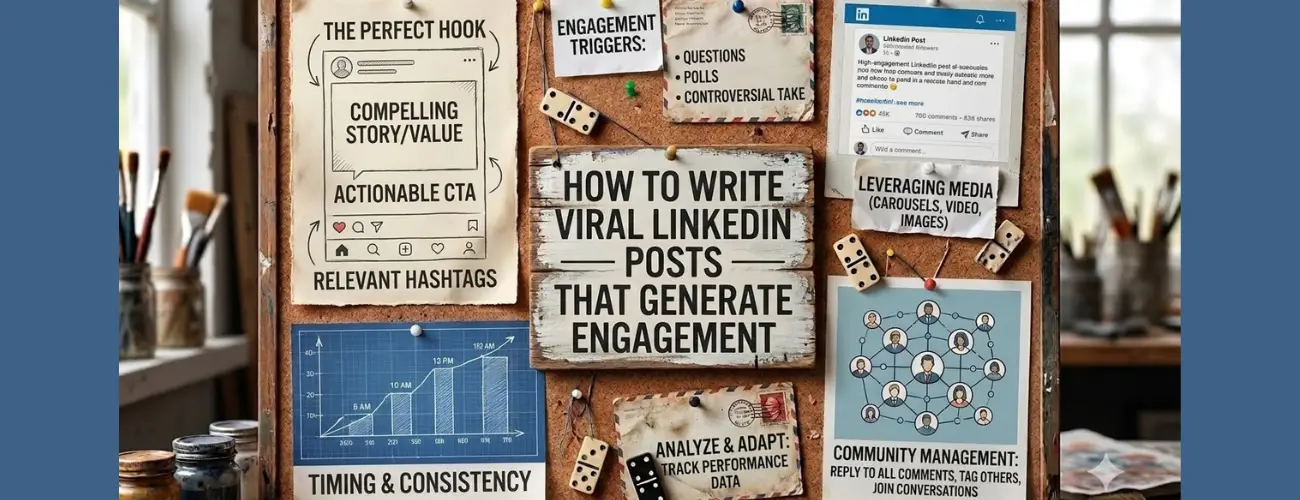
Viral LinkedIn posts combine a strong opening, valuable insights, authentic experiences, and content that encourages conversation.
A consistent LinkedIn content strategy, supported by LinkedIn profile optimization and effective LinkedIn content marketing, can increase visibility and engagement.
A structured LinkedIn personal branding course can also help professionals develop these skills systematically.
LinkedIn has changed significantly from being simply a platform for job searches and professional profiles.
Today, professionals use LinkedIn to build personal brands, demonstrate expertise, attract clients, develop business relationships, and create career opportunities.
But there is one challenge.
Millions of posts compete for attention.
You may have excellent knowledge and valuable experiences, but if your posts fail to capture attention, very few people will read them.
Writing engaging LinkedIn posts is not about chasing viral numbers. The real objective is creating content that makes people stop scrolling, read your perspective, and join the conversation.
What Makes a LinkedIn Post Generate Engagement?
High-performing LinkedIn content usually does three things well.
It captures attention.
It delivers value.
It creates conversation.
A post might teach readers something useful, challenge a common assumption, share an interesting experience, or offer a different perspective.
Strong posts commonly include:
An attention-grabbing opening
One clear central idea
Practical insights
Personal or professional experiences
Easy-to-read formatting
A reason for readers to respond
These principles should form the foundation of your LinkedIn content strategy.
Start With a Powerful Hook
The first few lines determine whether someone continues reading.
Avoid opening with lengthy background information.
Instead, immediately create curiosity.
For example, instead of writing:
“I attended an interesting leadership meeting yesterday and learned several things.”
A stronger opening might be:
“I spent 10 years believing great leaders always had the answers.
I was wrong.”
The second version creates curiosity.
Your opening can use:
A surprising observation
A strong opinion
An interesting question
A mistake you made
A lesson from experience
An unexpected result
The objective is not to create clickbait. Your opening should genuinely connect with the insight that follows.
Build a Consistent LinkedIn Content Strategy
One viral post rarely builds a strong professional brand.
Consistency does.
A good LinkedIn content strategy identifies several topics where you have genuine knowledge or experience.
For example, a marketing professional might focus on:
Marketing strategy
Customer psychology
Branding
Career lessons
A finance professional might discuss:
Financial analysis
Investment banking
Business performance
Career development
Having clear content themes helps your audience understand what they can expect from you.
It also prevents the common problem of wondering what to post every day.
Real-Life Example - The Marketing Manager
Consider a marketing manager who regularly posted generic marketing advice.
The information was correct, but engagement remained low because similar advice was already available everywhere.
The manager changed the approach.
Instead of writing generic tips, the posts began with actual workplace experiences.
One post explained why a campaign with excellent creative work failed.
Another described a customer insight that completely changed a marketing strategy.
Another shared a mistake made while launching a product.
The content became more personal, practical, and distinctive.
Engagement improved because readers were learning from genuine experience rather than reading information they could find anywhere.
Use Storytelling in LinkedIn Content Marketing
People remember stories more easily than lists of facts.
That makes storytelling an important part of LinkedIn content marketing.
You do not need dramatic life experiences to tell good stories.
Workplace experiences provide plenty of material.
A simple structure is:
Explain the situation.
Describe the challenge.
Explain what happened.
Share what you learned.
Connect the lesson to your audience.
For example, instead of writing five generic leadership tips, describe a leadership decision that failed and explain what it taught you.
The lesson becomes more memorable because readers understand the context behind it.
Make Your LinkedIn Posts Easy to Read
People usually scan social media before deciding whether something deserves their attention.
Large paragraphs make posts difficult to consume.
Instead:
Keep paragraphs short.
Use simple sentences.
Create sufficient white space.
Use bullet points when appropriate.
Focus each post on one central message.
Good formatting does not compensate for weak content, but poor formatting can prevent strong content from being read.
LinkedIn Profile Optimization Supports Your Content
Imagine someone reads one of your posts and finds it valuable.
What will they do next?
Many will visit your profile.
This is why LinkedIn profile optimization and content creation should work together.
Your profile should quickly communicate:
Who you are
What you do
Your expertise
Your professional experience
The value you provide
A strong post may attract attention, but an optimized profile helps convert that attention into connections, followers, inquiries, and opportunities.
Real-Life Example: The Finance Professional
A finance professional started sharing short explanations of financial concepts on LinkedIn.
One post explaining a commonly misunderstood valuation concept generated significantly more engagement than previous posts.
Hundreds of people visited the profile.
However, the headline simply displayed the person’s job title, and the About section had barely been completed.
The professional then focused on LinkedIn profile optimization, clearly explaining areas of expertise and professional experience.
Future content began generating not only engagement but also relevant connection requests and professional conversations.
The lesson is simple.
Your content attracts attention.
Your profile tells people why they should remember you.
Why a LinkedIn Personal Branding Course Can Help
Professionals often struggle because they approach LinkedIn without a clear system.
A LinkedIn personal branding course can help develop practical skills around:
Profile positioning
Content planning
Writing effective posts
Storytelling
Audience engagement
Building professional credibility
The purpose of a LinkedIn personal branding course should not be to teach people to imitate popular creators.
It should help professionals identify their own expertise and communicate it effectively.